Showing posts with label Travel. Show all posts

09 August 2012

Santa Fe Souvenirs

Much of Santa Fe looks as if it’s already been painted
by Georgia O’Keeffe.
The O’Keeffe Museum in town boasts an admirable but very small collection:
I lingered and yet managed to get in and out in about 15 minutes.
All photos by WVM except where noted.


Conscientious though I was in my research and in my opera-going, I had ample opportunity to explore Santa Fe during my visit there, and I thought I’d share a few pictures from the trip. I hadn’t been there since my fifteenth birthday, when the only music I heard was the mariachi band at the restaurant where we ate dinner. Perhaps needless to say, my experiences now were sufficient to keep me coming back again and again.

Prelude to a bliss: A double rainbow over the Motel 6, shortly before Susan Graham’s concert with Santa Fe Opera.

This isn’t to say that the trip was without hassles. My camera ran out of batteries the first morning I rose early and set out to take pictures. My razor broke in transit, without my noticing until I’d come very close to slashing my own throat. This explains why I’m looking so scruffy in my picture with Susan Graham, following her concert: I didn’t want to risk killing myself before I heard her. Besides, Susan’s singing brings me close enough to Heaven, thank you.

And on the way home, the dedicated baggage handlers at United Airlines decided that, no, transferring my backpack to my connecting flight was not a good idea. Forty-eight hours later, the bag was delivered to my doorstep. Mercifully, this lapse didn’t occur on the way to Santa Fe, or I’d have shown up to the opera in a stale T-shirt and jeans. Really not the impression I hoped to make.

The double rainbow, from a neighborhood
that is arguably more picturesque.
Photo by Nathan DePoint, used with permission.


But a few inconveniences and a little blood couldn’t diminish the delights of Santa Fe, among which was spectacular weather. I’ve written about the storm that participated so wholeheartedly in Thursday’s performance of Maometto II, but we had all kinds of gorgeous cloud formations, a full moon, and a double rainbow. Not to mention that temperatures were never too hot or too cold. Goldilocks would have been happy here.

No, this is not a long-lost painting from J.M.W. Turner’s late-period black-and-white phase. It’s the full moon over Santa Fe. I promise.

Susan remarked during her concert that Santa Fe Opera has the reputation of a kind of summer camp for singers. Running into so many familiar faces, I got the feeling that it’s summer camp for everybody from Opera World (a term Susan herself coined, lest we forget). That added a great deal to the fun. Moreover, it became increasingly easy to see why so many people I care about are drawn to this place. Maybe the following pictures will help you to see it, too.

Blossoms in a courtyard in old Santa Fe.

The ornate Catron Block, on the Plaza in old Santa Fe.

The Palace of the Governors, on the Plaza in old Santa Fe.

Faux pueblo architecture, in old Santa Fe.
I can’t remember which building this is.


The courtyard in front of the Shed, the restaurant where I enjoyed dinner with Fort Worth Opera friends Keith Wolfe, Nathan DePoint, and Joseph Lesley.

Friends from all over Opera World came to Santa Fe. I had lunch with the ever-fabulous Karen Kriendler Nelson and her faithful personal assistant, Pino Nelson, on the front porch at Clafoutis, a remarkably good French café.
Photo by our server, using Karen’s camera.


The colors at the Santa Fe Farmers’ Market thrilled me.
Almost anywhere you look, you can see why this town casts
such a spell over artists.


“You should have been here earlier, when we had artichoke blossoms,” said one vegetable vendor — who suddenly remembered then that she had one more left. “Do you want to be in the picture, too?” I asked,
but she demurred.


Bobbie Falls and Jeanne-Michèle Charbonnet, my intrepid guides in the Santa Fe Farmers’ Market.
Bobbie is displaying perhaps the gentlest expression I have ever seen on the face of any woman who didn’t want to pose for a picture.


A sampling of the bounty at the Santa Fe Farmers’ Market.

Yellow tomatoes are in season!
Oh, how I miss Franck’s produce at the Marché de Beynes!


Peaches are in season, too!

Bell peppers to charm even the Incredible Hulk.

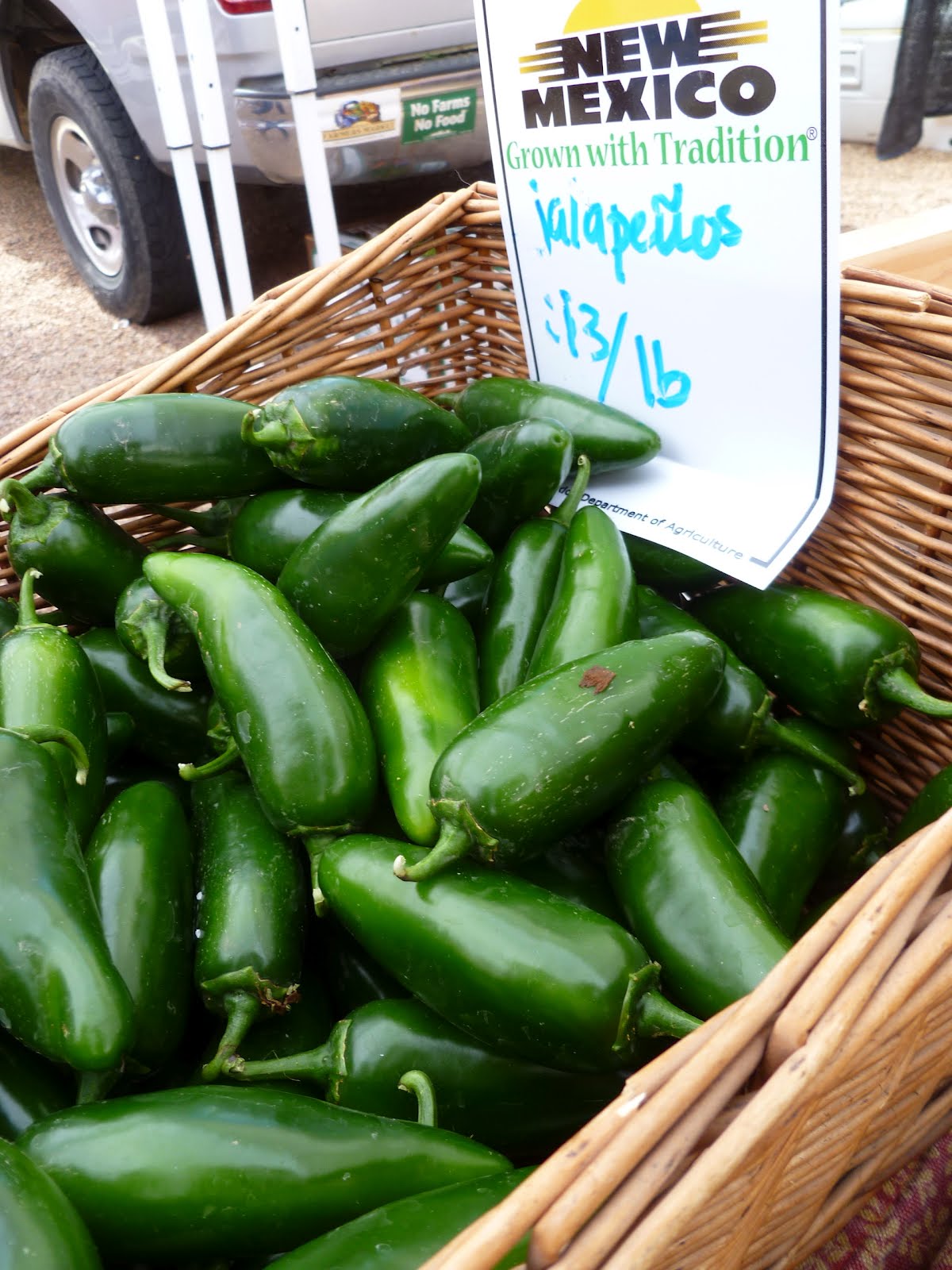
Look but don’t taste: Unable (or unwilling?) to bring back chilis for my pepper-popping roommate, I did at least take a few pictures.

Five Thousand Little Peppers, and How They Grew.

What to do after you’ve bought them, or else just buy ’em ready made:
Cooking peppers in the Santa Fe Farmers’ Market.


Jeanne-Michèle took me up into the mountains.
Personally, I feel that everybody needs to explore nature’s majesty in the company of an internationally acclaimed Wagnerian soprano.


The John Crosby Theater at the Santa Fe Opera.
Photo by Robert Reck, courtesy of Santa Fe Opera.


And did I mention that I saw Susan Graham?
Photo by Susan’s sister, using my camera.


Read more!

09 June 2012

Public Transportation in Dallas (No, Seriously)

I’m not making this up, you know: The DART train.

Growing up in Dallas, I suffered as keenly from the lack of a drivers license as from my virginity: I could not be considered anything but a child until I had gotten one and lost the other, and in some ways the two conditions were linked. Wheels meant independence and freedom. Dallas possessed many attractions in those days, including opera, art galleries, and repertory cinemas, but in order to reach any of them, I had to hitch a ride with a friend — or, even more shamingly, with a friend’s mother.

In those days, there was no public transportation system to speak of, by which I mean that the scrawny system in place wasn’t much, and also that nice people didn’t speak of it. Buses were dilapidated, stopped only at out-of-the-way places, and took forever to reach their destinations — or so we were told, in whispers, by people who had braved the ride.

Now, returning to the city, I discover what once would have been unimaginable: a perfectly brilliant light-rail system that is swift, clean, reasonably priced, and wonderfully efficient — and evidently not much used. Even at rush hour, I had no trouble finding a seat while getting where I wanted to go. Using it instead of a rental car or the kindness of my friends (or their mothers), I even have traversed the suburbs and arrived in that fabled no-man’s land, Downtown Dallas, a place I hardly ever saw when I was growing up.

Take the A Train: Denton’s commuter line.

Oh, the twists of fate! The DART train stops just a few blocks from my parents’ last home, in Carrollton, and it connects to the Denton A train, which stops not far from my godsons’ home. It’s almost painful to think how much easier my visits might have been, when the boys were younger, if only the rail system had been in place then. The money I saved on rental cars might have put them both through college.

And how much easier my boyhood explorations of Dallas might have been, too! Not least because the DART trains boast one tremendous advantage: they run much more frequently, and longer hours, than does the Denton rail, which appears to have been designed exclusively for 9-to-5 commuters and not (for example) for midday shoppers or for tourists. The DART trains go places I actually want to go, and it’s somewhat astonishing to look out and see — for instance — the “grocery store” outpost of Herrera’s Mexican restaurant, just steps from the DART Inwood station.*

Continue along this same line, and you wind up in the West End, a newish development of ancient buildings in Downtown Dallas, with all manner of defunct warehouses and office buildings remodeled as cute little restaurants, pubs, and clubs. Downtown Dallas features any number of beautiful skyscrapers and quiet little parks, few of which existed when I was a boy, but generally the area confirms the old joke about other big cities: that they’d be so much nicer if there were no people. The streets are deserted, like something out of a Twilight Zone episode.

Further out is Deep Ellum, a neighborhood that features nothing but music clubs and tattoo parlors. Here, too, development didn’t begin until long after I left town, and my few visits to the area were marked by extreme frustration over the lack of parking. That’s not a problem when you take the DART train, though the “Deep Ellum” station is actually a couple of blocks away from the authentic quarter, which in itself is quite spread out and decidedly not conceived with pedestrian traffic in mind. Still, there’s virtually no more excuse now to be the uncool sort of person who doesn’t hang out in Deep Ellum.

Since Dallas weather tends to be frigid in winter and blistering in summer — and since spring and autumn are more theory than seasons here — you may not be willing to endure the walks from station to landmark around town, though hardy urbanite that I’ve become, I don’t mind a bit. One of these days, I’m going to try the link to Fort Worth’s transit system, too.

Presumably, as Dallasites accustom themselves to the advantages of the rail system, they’ll use it more and make improvements, too. It would be nice not to have to go all the way downtown just to transfer to a given line, for example, and it would be very nice if the Denton trains ran more often, so that (for example) you might go out for the evening and not be stranded in Dallas.

But the very attempt at mass public transit in any part of Texas must be applauded. For those with limited budgets or no drivers license, there’s no calculating the benefits of liberty and mobility in a state that scoffs at the vastest suburban sprawl. And never mind the trouble I’d have enjoyed getting into, when I was a boy, if only I’d had this resource available.

Really, never mind. I’m sure I’d have lost my virginity eventually. I regret nothing.

All aboard for adventure!


*NOTE: When Godson #1 was a baby, we used to take him to the “grocery store” Herrera’s, where the total lack of décor and the limitless patience of the staff proved invaluable, since little Will invariably flung 98 percent of his own dinner and a substantial percentage of ours all over the restaurant. We used to leave extravagant tips as a means of apologizing for the cleanup that Will necessitated; it’s a wonder he ate enough to sustain himself. Now that he’s looking forward to his sophomore year at The University of Texas at Austin, we have to come up with other excuses and explanations for his conduct at the table.


Read more!

04 November 2011

Alexander Hamilton’s Grange

You’d never know it wasn’t closed.

Alexander Hamilton is known to have owned only one house, a fine-looking country mansion that hearkens just a bit to his Caribbean roots and that once commanded views of both the Hudson and the East Rivers from a point between what are now known as Harlem and Washington Heights. The neighborhood is known (to some) as Hamilton Heights, in fact, and numberless things here are named after him — almost as if invoking Hamilton might result in a flurry of $10 bills like manna from the heavens. But for a long time the house wasn’t accorded the celebrity or prestige that the homes of other Founding Fathers enjoy.

Moved from its original position to a site next-door to a church, on Convent Avenue, the Grange served for a while as a chapel. Starting in 1924, apparently, the Grange housed a Hamilton museum, under one aegis or another, but crammed in among other buildings as it was, it didn’t stand out, and I walked past it many times without ever noticing it.

Then somebody got the bright idea of moving the Grange once again, to St. Nicolas Park around the corner. This latest move took place in 2008, while I was in France. News coverage of the period makes clear that this was quite a spectacle, and I’m sorry to have missed it. Then yesterday I happened upon the place.

If you visit without the sort of portable device that allows you access to the Internet, and the National Park Service web pages devoted to the Grange, you will not be able to find out the open hours of the Grange museum. You will not even be able to tell which is the door you ought to use to go inside — and so you will lurk around the outside, as I did.

However, if you have the sort of portable device that allows you to take photographs with a cellular telephone — as I do now — at least you can take a few pictures. The lighting was indifferent and the photographer is of very, very limited talent and ability, but at least you’ll get an idea of the place, and of why I expect I’ll drop by again soon.

Yet I found myself glad that poor old Mr. Hamilton no longer lives in the Grange. Think of all the Jeffersonians — and Jacksonians (both the Andy and the Jesse varieties) — and the Obamites, too — who live in the neighborhood! Hamilton would probably spend all of his time on the porch there, like Clint Eastwood in Gran Torino, with a shotgun across his lap.


Read more!

16 August 2011

The Orzo Crisis at Air France

Follow the money: Who’s paying Air France to serve so much orzo?

When I first began flying Air France, the airline was still entirely state-owned, and setting aside the political and economic implications of privatization, and the cutbacks in service that have affected every company in the business lately, I feel the difference most keenly whenever the flight attendants come around with supper. Frankly, I suspect foul play.

After all, one can easily excuse the airline’s saving money by serving orzo — slippery little seed-shaped pieces of pasta — here or there. But to serve it constantly, both as a starter (“orzo salad”) and as a side dish to the main course, at the same meal, suggests that the fix is in, and the supplier must be somebody’s nephew.

Orzo isn’t a vegetable (and neither is anything else in the “salad”), and it isn’t French, either. Back in the day, Air France seized the opportunity to show off, and to share with travelers some of the best of French cuisine and wine, or at least to hint at the possibilities. Nowadays, the company seems to be throwing anything it finds at the passengers — and what it finds is orzo.

On my first flights, Air France treated me as if I were a passenger on an ocean liner in the Golden Age. Upon boarding, I was served a glass of champagne. After takeoff, the attendants came around with a cocktail cart, carrying more champagne, and other French wines, as well as the more usual beverages. The attendants also handed out printed menus, detailing the food that would be served at dinner.

After a brief interval, the attendants came around again with the promised meal, and more champagne, if you wanted it. The quality of the food wasn’t anything near what you’d find in a restaurant in France, but it was varied, tasty, and vastly superior to what you’d find in economy class on any other airline.

And the menus themselves were a marvel. I kept the first ones: printed on slick paper, about 5 inches by 7 inches, with a full-color illustration of vegetables from an old Vilmorin seed catalogue on the cover. Some day I’ll frame them and hang them in my kitchen.

On the Concorde, we got truffle omelettes.
I don’t expect comparable treatment in economy class, however.


In recent years, Air France eliminated the complimentary champagne upon boarding, and the size of the menu shrank to a small card. Then the cocktail service was eliminated, and now there’s no more menu, either: the attendants simply inquire whether we want one of two options. Even the wine has shrunk, from a standard mini-bottle (containing enough for a couple of small glasses) to something that resembles a test tube and barely has room for a label. So much for promoting the great wines of France.

It was a shock, when the Orzo Era began, to discover that, following the famous orzo salad, orzo was also served with the main course. If French cuisine stands for anything, it is variety, and serving the same thing twice in one meal is anathema.

It’s easy to see why orzo would hold some appeal for the caterers on Air France, since it’s so resilient. Unlike fresh vegetables, it won’t spoil, and unlike larger pasta, it won’t dry out quickly. And unlike smaller pasta, such as couscous, it’s less likely to spill everywhere.

But couscous would at least be the sort of food one can find in France: some French people of my acquaintance don’t even know what orzo is, and I’ve never seen it in any restaurant or kitchen here. (I have found it on grocery shelves, however.)

Along with the rise of orzo has come a decline in the rest of the cooking. On my most recent flight, I had a choice of beef or pasta. Although (somewhat to my surprise) the main-course pasta in question did not consist of more orzo, it was nevertheless pasta — that is, exactly the same thing that we’d been served for a starter.

The beef was no prize, however: a tough, tepid, unidentified stew entirely lacking in vegetables but served with a gelid lump of mashed potato, quite possibly of the “instant” variety. Americans who flew in the 1960s and ’70s — or who ate frozen TV dinners in the same period — would recognize this dish immediately.

At least there’s been an effort to make the orzo salad more interesting. When I first encountered it, it was bland, mixed with a few stray pieces of carrot. Now it’s been mixed with curry and a few raisins, so at least there’s some flavor.

Other airlines have responded to recent economic crises by cutting back on catering, of course, but it’s to be noted that these days even the Americans do a better job on transatlantic flights: Continental’s food is superior to that of Air France. Given the justifiable pride that the French take in their cooking, that’s a scandal.

There is this consolation, however: because it is so difficult to get a truly bad meal in France, the traveler is guaranteed to eat better, wherever she goes upon arrival.

However, if the traveler so desires, she can make her own orzo at home.


Read more!

08 August 2011

Saratoga Party

Gentlemen, start your engines! Or something like that.

My excursions into New York State have been few and can be understood in terms of Saul Steinberg’s famous westward view from The New Yorker magazine: anything beyond Westchester is simply “upstate,” a vast yet undistinguished landscape untouched by interest until the Canadian border — or, really, the Montreal city limits. Periodic attempts to correct my parochialism and to expand my horizons beyond Chappaqua reveal some absolutely gorgeous scenery, quaint old farmhouses and charming villages, curious 19th-century resorts, and the occasional college campus of note (my godchildren’s Bard, my godmother’s Vassar).

Upstate Scenic: On the bank of a golden pond

Surely one of the most renowned of the aforementioned upstate resorts is Saratoga Springs, which began to attract tourists more than two centuries ago. This is not to count the Native Americans, who discovered the local springs and praised the virtues of the mineral water there. The racetrack opened in 1863, and it’s a fair indication of the insouciance of the Yankees (or anyway, the New Yorkers) that they’d go chasing after pleasure while the rest of the country was in the throes of a civil war.

The grandstand.
It’s almost impossible to squeeze the whole thing into the viewfinder.


Last week I returned to Saratoga for the first time in many years, and discovered a bit of what lies beyond the aggressively picturesque storefronts and grand hotels of Broadway, which were all I’d seen on my first trip. Of principal interest was the Saratoga Race Course, also known as “The Spa,” which is a sort of Disneyland of horseracing. Everything is so picture-perfect! You half-expect to see costumed characters dancing around — and then you see the ladies in their hats (a Saratoga tradition), and you think, “Close enough.”

An actual race. I don’t remember which horses these are.
(Probably because I was fiddling with the camera.)

Perhaps since I so recently read Ivanhoe, thoughts of medieval tournaments inevitably sprang to mind. There are pavilions everywhere, and the pyramidical turrets along the grandstand recall the tents of warrior knights; vendors roam among the crowd or occupy their own sort of stalls; and the contests are announced with much fanfare — courtesy of a fellow called Sam Grossman, who is the track’s official bugler.

Young Lochinvar is come out of the west.

Meanwhile, the spectators are most definitely divided according to rank, much as they would have been at Ivanhoe’s tournaments. The gentry (i.e., those who are willing to pay) occupy the grandstands and the clubhouse, and eat and drink in a restaurant called the Carousel, while the more plebeian carouse outdoors. On the outskirts of the park, they gather around picnic tables and blankets, sit on lawn chairs or the ground, and watch the proceedings from afar — on TV screens.

The “back entrance” to the racecourse.
See what I mean about Disneyland?


Okay, maybe it’s not quite what Walter Scott envisioned. But it’s also much less violent (happily), and alongside Ivanhoe, I wouldn’t have been surprised to see the Marx Brothers turn up, too, hawking tootsie-frootsie ice cream and making mischief. If a horse named High Hat had been running, I’d have bet on him.

Clearly, I didn’t have the right racing form.

And that willingness marks a significant development. My only visits to the track were long ago, at Bossier City, Louisiana, where I never permitted myself to place a single bet. (The real interest was the road trip with my high-school friends, and the traditional pit stop at Longview, Texas, where we knew of a little diner where they served chicken fried steaks as big as asteroids.) Now, in Saratoga, egged on by Patrick and his father, who are locals and know what they’re doing, I placed four bets.

Frazil, the first horse
on whom I’ve placed a winning bet.
He’s going the wrong way here, but that’s because the race is over
and he’s off to be congratulated (and also hosed-down).


One of my horses won, but I bet so little that my winnings were really not more than symbolic. Two other horses lost, and the fourth seemed to be in some confusion as to whether there was a race at all. He loped along amiably after the others, enjoying the summer afternoon, in no kind of hurry, and I counted it a courtesy on his part that at least he remembered to point himself in the right direction, mostly.

They are beautiful creatures, aren’t they?

My losses were small, because my bets were risible. (Literally so: Patrick laughed at me.) But really, I don’t think one must bet in order to enjoy the races, and at least for this neophyte, soaking up the ambiance is plenty of entertainment. The races themselves are quick and exciting, attended by ritual and ceremony, and the people-watching is primo. Also, the beer is reasonably priced.

Under review: Before the race, in the paddock.
(Interestingly, I wore similar socks to gym class in the 1970s.)


Later we went to the Saratoga Performing Arts Center, or SPAC, which is the other half of the “SPAC and Track” combination that can pretty well occupy a full day. Seated on a sloping lawn just beyond the open-air auditorium, we enjoyed a fine performance of French and Russian music by the Philadelphia Orchestra, led by Stéphane Denève, with guest artist Yo Yo Ma; and perhaps even more, we enjoyed a lavish picnic, courtesy of my new friends Eileen and Alec. Elton John is coming to the center on Labor Day Weekend, they told us, and that seems like an irresistible reason to return to Saratoga. “The Bitch Is SPAC” — it’s got a ring to it, doesn’t it?

In any case, it’s good to be reminded that the world is full of pleasant places, with new ground to explore, and fresh discoveries to surprise me.

Yet another little girl falls under the equine spell.
I didn’t have the guts to take pictures of the ladies in fancy hats.


Read more!

30 July 2011

The Meaning of Boston

For all of its charms, Boston isn’t one of the first cities I’d list among the most significant places I’ve known. And yet, in a gradual, almost stealthy way, Boston has accrued significance in my life, over the years, as I’ve been reminded the past few days.

It was on the campus of Harvard University, for example, that I first began to understand that going to an Ivy League school was within my grasp, and the campus that had seemed like a tourist attraction only a couple of years before — we went to see the Glass Flowers, for instance, when I was a boy — became a sort of template for my ideas about college, and myself at college. The school rejected me, when the time came, and I’m convinced I got a superior undergraduate education at Brown, but it still looks like a university, and to walk there is to remember the ribbon-cutting that opened the path to my future.

On the Avenue: I get the “wealth” part,
but what’s so “common” about it?


When I was in college, and the pressure of undergraduate life got to be too much for my delicate sensibilities, I used to take a Peter Pan bus to Boston. The fare was cheap, and I was anonymous. I’d walk up and down the darkened streets, take the T to Cambridge and buy books and a snack, then hurry downtown again before the midnight bus back to Providence. I never went to a movie or a play or a bar, or did any of the things you might expect, or I might expect of myself. I hardly know how to explain the modesty of my program, except to say that it was a relief simply to be a face in the Boston crowd.

Today, my college roommate is a Harvard professor, and one of the few people likely ever to recognize me when I get off the T at Harvard Station.

The stage upon which we strutted and fretted —
for a few hours, anyway.

Twenty-five years ago, I spent my only weeks as an official resident of the city, when the Broadway musical Rags settled into the Shubert Theatre for a month of tryouts, and I settled into a little apartment across the alley from the stage door. It’s hard to believe that a quarter-century has passed since that summer, and that so many of the people who were so important to me then are gone. And yet the Theatre District is nicer now than it was then, even my apartment building looks rather posh, and I know I’m not the boy I was then, the production assistant bedazzled by everything.

I’ll have more to say about the show as we draw closer to the anniversary of opening night in New York, but for now it’s enough to say that those weeks in Boston were part of one of the greatest adventures anyone has ever known — and I knew it, even at the time. Even when things went wrong (and they did), there was something epic in the wrongness, and a more mystifying magic whenever things went right.

The street where I lived.

A few years later, I held my first godchild for the first time in an apartment on Commonwealth Avenue, and strolled with him and his mother along the tree-lined mall. A baby at the time, only a few weeks old, William slept soundly in the Snuggli I’d strapped to my shoulders, his little head pressed against my heart.

Now he’s a college student, and I’ve got lots of godchildren who’ve come along since (including a few who live on Commonwealth). Yet the sweetness of that first afternoon in March has never left me; spring had begun to stir in the trees along the avenue, and so had something inside me. I was launched, yet again, on a path. It’s to be wondered whether I’d have pursued my career as a godfather quite so avidly if William hadn’t behaved himself so angelically that day. But in the event he made it absolutely clear to me that my friends’ children must become my friends, too, and they’re an indispensable part of my life.

When William met William.
(The torn bluejeans were an essential part of my graduate-student style.)
Photo by Elise Goyette©


Thus I recognized as an honor that another of my godsons deigned this week to invite me kayaking on the Charles. Never mind that I’m less sporty than I used to be, and I was never as sporty as he. Never mind that I hadn’t been near a rowboat since I was Jeremy’s age. No, the thing must be done; it was a privilege even to be asked, and there was no question of refusal.

My original understanding — that Jeremy and I would share a two-seater — was fallacious, and folly. Fortunately, I hadn’t dared to suggest to him that he board anything other than a single. He is a serious oarsman already, and once afloat on the Charles, he sneered at the doubles. Amateurs! Landlubbers! We would never be like them! I didn’t even notice the blister that developed on my left — or “port,” if you prefer — hand, until long after it had burst and torn open; and I never felt the sunburn, despite having slathered on my shoulders sunblock sufficient to ice a wedding cake.

That’s a paddlin’.
-- Jasper, The Simpsons

I no longer possess the sense of direction I developed from all those winter nights during my college years, when a wrong turn on the way to the Boston bus station might mean hypothermia in the darkened streets. But as we rowed downstream, I could identify a few landmarks, and I could persuade myself that I knew where we were going. Jeremy retains a gratifying tolerance for my conversation and my jokes — I availed myself of the occasion to inform him that the Colonials, in their zeal, dumped so much tea in the Harbor that the waters of the Charles are tinted brown to this day — but talk meant most often that our boats collided.

“There is nothing — absolutely nothing — half so much worth doing
as simply messing about in boats.”
-- Kenneth Grahame, The Wind in the Willows

I’m not very good at steering. I’m better, in fact, when I don’t use the rudder. That is the sort of boater I am. But I wouldn’t have known this without the agency of my godson. Now, each time I see the Charles, I’ll think of him.

And Boston has gained one more reason to mean something to me.


Read more!