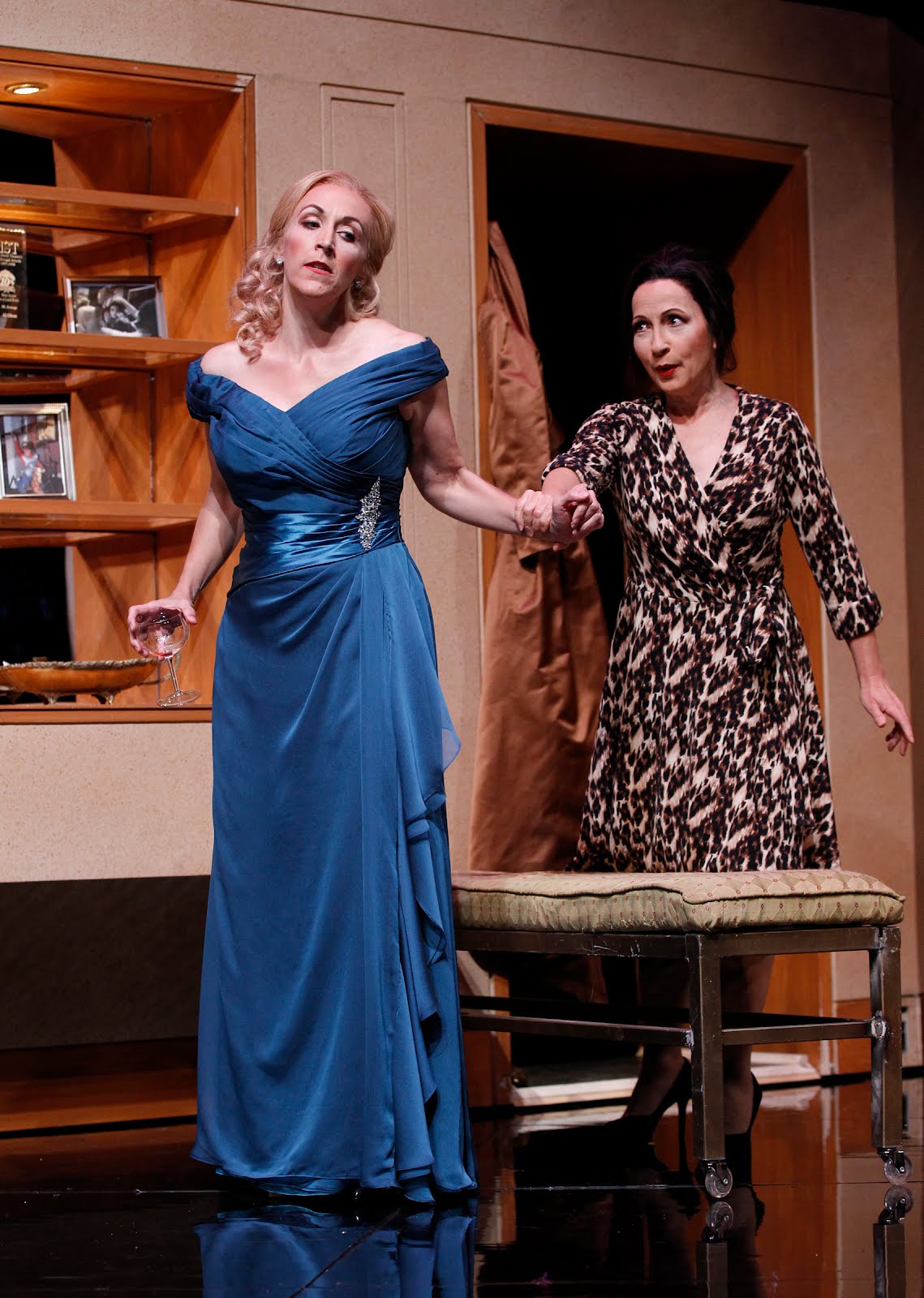
09 June 2012

Public Transportation in Dallas (No, Seriously)

I’m not making this up, you know: The DART train.

Growing up in Dallas, I suffered as keenly from the lack of a drivers license as from my virginity: I could not be considered anything but a child until I had gotten one and lost the other, and in some ways the two conditions were linked. Wheels meant independence and freedom. Dallas possessed many attractions in those days, including opera, art galleries, and repertory cinemas, but in order to reach any of them, I had to hitch a ride with a friend — or, even more shamingly, with a friend’s mother.

In those days, there was no public transportation system to speak of, by which I mean that the scrawny system in place wasn’t much, and also that nice people didn’t speak of it. Buses were dilapidated, stopped only at out-of-the-way places, and took forever to reach their destinations — or so we were told, in whispers, by people who had braved the ride.

Now, returning to the city, I discover what once would have been unimaginable: a perfectly brilliant light-rail system that is swift, clean, reasonably priced, and wonderfully efficient — and evidently not much used. Even at rush hour, I had no trouble finding a seat while getting where I wanted to go. Using it instead of a rental car or the kindness of my friends (or their mothers), I even have traversed the suburbs and arrived in that fabled no-man’s land, Downtown Dallas, a place I hardly ever saw when I was growing up.

Take the A Train: Denton’s commuter line.

Oh, the twists of fate! The DART train stops just a few blocks from my parents’ last home, in Carrollton, and it connects to the Denton A train, which stops not far from my godsons’ home. It’s almost painful to think how much easier my visits might have been, when the boys were younger, if only the rail system had been in place then. The money I saved on rental cars might have put them both through college.

And how much easier my boyhood explorations of Dallas might have been, too! Not least because the DART trains boast one tremendous advantage: they run much more frequently, and longer hours, than does the Denton rail, which appears to have been designed exclusively for 9-to-5 commuters and not (for example) for midday shoppers or for tourists. The DART trains go places I actually want to go, and it’s somewhat astonishing to look out and see — for instance — the “grocery store” outpost of Herrera’s Mexican restaurant, just steps from the DART Inwood station.*

Continue along this same line, and you wind up in the West End, a newish development of ancient buildings in Downtown Dallas, with all manner of defunct warehouses and office buildings remodeled as cute little restaurants, pubs, and clubs. Downtown Dallas features any number of beautiful skyscrapers and quiet little parks, few of which existed when I was a boy, but generally the area confirms the old joke about other big cities: that they’d be so much nicer if there were no people. The streets are deserted, like something out of a Twilight Zone episode.

Further out is Deep Ellum, a neighborhood that features nothing but music clubs and tattoo parlors. Here, too, development didn’t begin until long after I left town, and my few visits to the area were marked by extreme frustration over the lack of parking. That’s not a problem when you take the DART train, though the “Deep Ellum” station is actually a couple of blocks away from the authentic quarter, which in itself is quite spread out and decidedly not conceived with pedestrian traffic in mind. Still, there’s virtually no more excuse now to be the uncool sort of person who doesn’t hang out in Deep Ellum.

Since Dallas weather tends to be frigid in winter and blistering in summer — and since spring and autumn are more theory than seasons here — you may not be willing to endure the walks from station to landmark around town, though hardy urbanite that I’ve become, I don’t mind a bit. One of these days, I’m going to try the link to Fort Worth’s transit system, too.

Presumably, as Dallasites accustom themselves to the advantages of the rail system, they’ll use it more and make improvements, too. It would be nice not to have to go all the way downtown just to transfer to a given line, for example, and it would be very nice if the Denton trains ran more often, so that (for example) you might go out for the evening and not be stranded in Dallas.

But the very attempt at mass public transit in any part of Texas must be applauded. For those with limited budgets or no drivers license, there’s no calculating the benefits of liberty and mobility in a state that scoffs at the vastest suburban sprawl. And never mind the trouble I’d have enjoyed getting into, when I was a boy, if only I’d had this resource available.

Really, never mind. I’m sure I’d have lost my virginity eventually. I regret nothing.

All aboard for adventure!


*NOTE: When Godson #1 was a baby, we used to take him to the “grocery store” Herrera’s, where the total lack of décor and the limitless patience of the staff proved invaluable, since little Will invariably flung 98 percent of his own dinner and a substantial percentage of ours all over the restaurant. We used to leave extravagant tips as a means of apologizing for the cleanup that Will necessitated; it’s a wonder he ate enough to sustain himself. Now that he’s looking forward to his sophomore year at The University of Texas at Austin, we have to come up with other excuses and explanations for his conduct at the table.


Read more!

05 June 2012

Fort Worth Opera Festival 2012: Adamo’s ‘Lysistrata’

War of the Sexes, Sex of the Wars: Nico and Lysia engage.
Scott Scully and Ava Pine in Mark Adamo’s opera.
Illustration (in progress) by WVM©


The final performance of Fort Worth Opera’s 2012 Festival was Mark Adamo’s Lysistrata, a contemporary comedy that had its premiere at Houston Grand Opera in 2005; the premiere production went on to New York City Opera, where I saw it, in 2006.* Featuring a lively cast of singers who are as much fun onstage as they are off- (no small feat, that); a swift, smart staging by David Gately; a commanding interpretation by conductor Joe Illick; and the repurposed frame of the set of City Opera’s 1966 Julius Caesar, this Lysistrata was a brilliant example of what Fort Worth Opera does best. Not only was this an immensely entertaining production in and of itself, it also made the strongest case yet for Lysistrata’s place in the repertory of companies across the United States.

And it’s one measure of the ways that Fort Worth’s general director, Darren Keith Woods, has brought the audience along, not merely forcing folks to take their medicine when he presents a new opera, that my godmother, unable to attend the Festival this year, expressed greatest regret at missing Lysistrata. Clearly, Darren understands what makes new work appealing, and as a result, Fort Worth audiences are enthusiastically seizing opportunities that many other cities — too often including New York — pass by.

Mark’s libretto uses Aristophanes’ ancient comedy as a starting point for an increasingly serious examination of conflict — both on the battlefield and in the bedroom. You get some sense of his ingenious approach when you consider this opera’s “checklist” numbers, in which the men prepare for combat (two choruses) and the women prepare for love (one chorus). Broad humor, such as the exaggerated foreign accents of the Spartans (redolent of Lili von Shtupp), blends with satire (notably, the wry characterization of women protestors) — and with romantic outpourings and ultimately a hard-won, very serious wisdom, which Mark once summed up for me as “Treasure the truces.”

With comparable ingenuity, Mark’s score finds sounds to match the sense. I was particularly struck, on this occasion, by the echoes of Copland and Bernstein I heard — since I expected exactly such echoes in Mark’s first opera, the all-American Little Women, but didn’t find them there, because the last thing Mark Adamo sets out to be, is predictable. Overall Lysistrata is a complex score, its tonalities ripe for study, and yet it’s easy to enjoy, sweet and merry, hugely entertaining in its intricacies, even for those of us who aren’t scholars.

Superstar Ava Pine.
Photo by Ron T. Ennis© courtesy of Fort Worth Opera.


Lysistrata might well have been written for a cast of young singers, many of whom are Fort Worth favorites. As Lysia, the Athenian wife who devises the sex-for-peace bargain, soprano Ava Pine returned to the company in utterly brilliant form, willowy and gorgeous of figure and supple and shimmering of voice. Some of her previous appearances in Fort Worth have hinted at the assets she displayed in Lysistrata: her humane sense of comedy in Donizetti’s Elixir of Love (2010), for example, and her fearlessness in contemporary music, as well as her flawless English diction, in Angels in America (2008).

But this performance seemed to gather up all her gifts, wrap them in a shiny ribbon, and hand them over to the audience. Has she ever been lovelier, more lyrical, more a full-fledged star? I could hardly contain my happiness.

Dimples of steel, abs of bronze:
Nico (Scully) reevaluates his strategy.
Photo by Ron T. Ennis© courtesy of Fort Worth Opera.


Tenor Scott Scully has appeared with the Fort Worth company a few times, too, but never in a role as substantial and as fully developed as that of Nico, the Athenian commander and Lysia’s husband. His performance on Sunday fulfilled every promise he ever made as an artist here over the years: I marveled at his heroic tone and clarion projection throughout the role’s extensive vocal and emotional range: tender, virile, true.

Other leading roles were taken by familiar faces, most of them current or former members of the company’s Opera Studio; their success underlines the suitability of Lysistrata’s score for skilled but youthful singers. Meaghan Deiter, who so courageously incarnated Katisha in last season’s Mikado, found Kleonike an authentically congenial fit for her lush tone and sharp humor. Ashley Kerr, an alumna of the Opera Studio, lent Myrrhine some of the afternoon’s most passionate vocalism; I’m nuts about her sound, and it’s telling, I think, that a role I hardly remembered from six years ago now seems quite rightfully the second female lead in this opera. Among the Spartan women, Alissa Anderson (Lampito) and Corrie Donovan (Charito) proved especially effective in comic sequences.

Bass-baritone Seth Mease Carico, so memorable as the Scarpia-esque Cuban revolutionary in Jorge Martín’s Before Night Falls (2010), returned to play Leonidas, the Spartan general. It’s rare to find an artist so young with such a firm grasp of command, but Carico is always completely in charge of the stage and of the most difficult music. Baritone Michael Mayes, a native of Cut and Shoot, Texas (no, seriously), enjoys a sterling reputation among my opera friends, but this was the first time I’d heard his generous, supple voice: now I’m a fan, too. He returns next season in Tom Cipullo’s Glory Denied, and what a lucky break that I’ll be around to hear him.

The women and the men dig into their respective positions.
Richard Kagey’s design builds on Ming Cho Lee’s historic original set for Handel’s Julius Caesar, from 1966.
Photo by Ron T. Ennis© courtesy of Fort Worth Opera.


Given that David Gately will direct and Joe Illick will conduct Ariadne auf Naxos, the opera in which I’ll make my company debut next season, I was profoundly and personally gratified to find them both excelling in Lysistrata. Joe, who had conducted a thrilling Tosca the night before, demonstrated his range this weekend — surpassing himself, really, by tackling two such differing scores with such confidence and command. David steered the cast along tricky physical and emotional paths, without ever overdoing either the sincerity or the silliness.

As I reflect on the variety and the excellence of this season’s Fort Worth Opera Festival, I feel utterly validated in my early appraisal of the company. Darren and his team make every opera seem fresh and dynamic, and they’re afraid of nothing.** This season demonstrates their embrace of every kind of repertory, and the sensitivity and intelligence with which they approach each work. Somehow, next year, I’m going to be a part of all that. Let’s hope I’m worthy of the honor!

Your fortunate correspondent with two of his favorite singers:
Native Texans Scott Scully, WVM, and Ava Pine,
Bass Hall, Fort Worth, 3 June 2012.
Photo by Kurt Howard.


*NOTE: The role of Lysia was created by soprano Emily Pulley, another Texan, who joined Fort Worth Opera this season to sing the role of Bea in Jake Heggie’s Three Decembers.

**Afraid of nothing with the possible exception of Kurt Weill, that is. But hey, I’m working on the problem.


Read more!

03 June 2012

Fort Worth Opera Festival 2012: Puccini’s ‘Tosca’

Vivo dell’arte di Carter!
Ms. Carter Scott as Floria Tosca,
Fort Worth Opera, 2012
Illustration by WVM©


Opera at its best makes no apologies for what it is, and that’s one reason, I think, that it has always appealed to the misfits in society. Opera is outsized, flamboyant, passionate, loud, unlikely to fit in, unrestrained and unashamed — just like us, and in some cases, just like the people who create opera.

Opera doesn’t get any flashier than Puccini’s Tosca, the heroine of which is an opera singer. In Fort Worth Opera’s bracing production, you never once forgot what Floria Tosca does for a living, and the full-throttle approach of soprano Carter Scott in the title role was matched by Daniel Pelzig’s throw-’em-across-the-stage direction, Andrew Horn’s monumental scenic designs, and Joe Illick’s sculptural approach to the orchestra. Thoroughly and unapologetically traditional, this Tosca proved exceptionally satisfying.

Never was Tosca more tragic onstage!
Carter Scott as Tosca, with Michael Chioldi as Scarpia.
Photo by Ron T. Ennis©
Courtesy of Fort Worth Opera

Scott impressed me tremendously as Puccini’s Turandot in Fort Worth Opera’s 2009 production; when I heard she would return as Tosca (a role she sang here in 2005, too, though I missed it), my excitement mounted. If anything, she surpassed my lofty expectations, deploying a force-of-nature instrument that was never less than thrilling. Yet she explored subtler moments in both the score and the drama, scaling back for softer singing at times, and finding a girlish insecurity underneath Tosca’s prima-donna jealousy.

Meeting her head-on, baritone Michael Chioldi possessed like a demon the role of Baron Scarpia, a guy who seemed incapable of addressing any other character without flinging him across the stage, and who thundered and insinuated his menace and lust with equal abandon. Roger Honeywell’s tenor voice simply isn’t produced with ease sufficient to match the kinds of vocal characterizations offered by his colleagues, but he always cuts a dashing figure onstage and his voice rang out where it counted most. Among the smaller roles, bass Rod Nelman turned in the most musical Sacristan I’ve ever heard.

In the pit, Illick shaped the score much more aggressively than I’m accustomed to hearing him do, and he stretched out not only certain musical phrases but also pregnant pauses, to thrilling dramatic effect. It says a lot when the audience is absolutely silent during the interlude in which Tosca lays out Scarpia’s body. Unfortunately, the curtain fell on each act while the music was still playing. Human nature is irresistible in such circumstances, and we began to applaud much, much too soon, losing quite a lot of those moments in the score when Puccini really concentrates his energy and is at his most expressive.

Doomed lovers: Scott and Honeywell as Tosca and Cavaradossi.
Photo by Ron T. Ennis©
Courtesy of Fort Worth Opera.


Apart from these miscalculations in ringing down the curtain, Pelzig’s staging offered plenty of pertinent insight into the relationships and realities of this drama. I noted with pleasure, for example, the way Tosca peeped into the corridor outside Scarpia’s apartment before fleeing the murder scene at the end of Act II. Still, for the most part, this Tosca was about the embrace of the extreme: big passions, big gestures, big voices, big sets, big hair. It seemed too much for mere mortals to bear, and yet we all prevailed, and were better for it. That’s opera — that’s art — that’s life.

And thus what might have been expected to be the most conventional offering in this 2012 Festival season — one of the “safest” choices, in contrast to the unfamiliar, contemporary works on the calendar — turned out to be an unexpected triumph.


Read more!

02 June 2012

Fort Worth Opera Festival 2012: Mozart’s ‘Marriage of Figaro’

Figaro stars Jonathan Beyer (Count Almaviva), Andrea Carroll (Susanna), Wallis Giunta (Cherubino), and Jan Cornelius (Countess Almaviva).
Illustration in progress by WVM©


The Fort Worth Opera Festival really does try to program a little something for everyone. This means that, along the attention-getting, sometimes artistically (or even politically) challenging contemporary works, the company also produces the standard repertory — generally with stagings that are traditional but smart. Consider the toy-theatre Turandot that Daniel Pelzig directed, or the psychologically taut Lucia di Lammermoor that David Gately directed, both in 2008 — which is to say, the same festival that saw Floyd’s Of Mice and Men and Eötvös’ Angels in America.

The aim, clearly, is to challenge the maximum number of operagoers while losing the minimum. What strikes me is that Fort Worth’s productions of standard repertory tend to respect the music and to allow for the possibility that the audience has never seen a given work before. We get a chance to evaluate a score on its own terms, without editorializing or pandering or wholesale revision. Hardcore buffs sometimes sniff at such productions as “safe,” and yet arguably an opera can be safe only in so far as the original work itself was safe when the composer created it.

These thoughts occurred as I watched this season’s standard-rep productions, Mozart’s Marriage of Figaro and Puccini’s Tosca (about which I’ll have more to say in an upcoming report), which managed to generate a considerable excitement in the audience — even in this jaded old grey-eared scribbler — mostly through smart, well-rehearsed musical interpretations but also through clear, coherent dramatic action.

Bride and groom:
Figaro (Donovan Singletary) and Susanna (Andrea Carroll).
Photo by Ron T. Ennis © courtesy of Fort Worth Opera.

Musical values really carried the day in Figaro, thanks to a winning young cast and the spirited conducting of Stewart Robertson. This score is rather like a freight train made of soap bubbles: it surges forward with overwhelming, possibly crushing momentum, and yet the whole thing can be upset with the slightest wrong touch. Just like life itself: that’s what makes this music such a joyous exhilaration when it’s performed properly.

Robertson expertly navigated all the swirling currents, from the shimmering reflections on the rippling surface to the cold still depths, and he elicited confident, pointed interpretations from his young cast. You could be forgiven for forgetting how tough a job this really is; Robertson made it all seem easy.

By contrast, Eric Einhorn’s staging was easy in a less flattering sense. The action was very, very broad — far too much so for my personal taste, and at times almost to the point of burlesque. And yet it presented the character relationships clearly and accurately, so that even people who didn’t know the story could follow the dizzying doings on this “folle journée.”

Yes, the audience might have gotten more out of a more nuanced, more detailed production, one that played more on class distinctions and subtler relationships.* But with one significant exception, the decision to treat Figaro as a broad comedy did no harm, and it may even have made things easier for audiences new to the piece.

That exception was Figaro himself, as portrayed by Donovan Singletary, a charismatic young artist who has everything it takes to make a superlative Figaro and yet who appears unable to let well enough alone. He overacted as if from desperation that he might not communicate properly if he didn’t spell out every single syllable in great big capital letters — and he never stopped moving. This affected his vocal production, too, frequently steering him into poor projection, uneven support, and unclear diction.

Some blame must lie with Einhorn and Robertson, and yet, since the other young artists mostly avoided potential pitfalls, I’ve got to worry about Singletary and to hope the tendencies on display Saturday aren’t habit: I’d hate to see him sabotage a career so promising.

The women were the true heroes of this Figaro. As Susanna, young Andrea Carroll offered a feisty dramatic interpretation and ravishing vocal tone, perfectly centered, easily produced, generously proportioned, a pure pleasure to listen to. How I wished that Mozart had given Susanna more to sing! Carroll is 22, I’m told, and so with a little luck, we’re witnessing the dawn of a major career.

Hardly less impressive was Jan Cornelius as the Countess, the only performer onstage who seemed aware that class is an issue in this spectacle. Cornelius embodied noble elegance, presenting a gracious façade that cracked only when the character’s emotions became too powerful to contain: in short, an ideal dramatic interpretation. She brought to her assignment mellifluous tone and the breath to send her long vocal lines spinning and soaring.

“Voi che sapete”: Yes, these women really do know.
Jan Cornelius (Countess), Andrea Carroll (Susanna),
and Wallis Giunta (Cherubino).
Photo by Ellen Appel© courtesy of Fort Worth Opera.


As Cherubino, Wallis Giunta did a terrific job of portraying the gangling adolescent boy — all the more remarkable a characterization, since she’s drop-dead gorgeous and a sometime fashion model. What a shame that Einhorn didn’t approach Cherubino’s cross-dressing scenes with a much lighter touch: instead, we mainly got lots of pulling the skirts up over the head, which doesn’t tell us much about the character, or his obsession with women, and isn’t even particularly funny. Giunta’s singing on this occasion wasn’t as distinctive as her acting, but overall she’s an appealing young artist and I look forward to watching her progress.

Kathryn Cowdrick’s plummy Marcellina and Corrie Donovan’s chipper Barbarina rounded out this Figaro’s exceptionally strong complement of women artists — and if, among the men in the cast, only bass Rod Nelman as Don Bartolo was up to the ladies’ level, it’s perhaps not surprising. The bar was very high indeed.

From a surprisingly tentative Act I, Jonathan Beyer seemed to grow into the Count’s role, gradually moving beyond swagger to something like nobility, beyond bluster to authentic feeling. With his smooth, pleasing baritone and his tall, naturally imposing stage presence, Beyer has much to offer, especially once he’s acquired a bit more experience and confidence.

Act I represented the height of Einhorn’s directorial shenanigans, and it’s a measure of Nelman’s skill that he managed to score all the points of Bartolo’s vengeance aria even while crawling on the floor. Thereafter, Einhorn seemed to calm down, leaving Nelman free to offer a zestily sung, bighearted interpretation. Having enjoyed his Dulcamara in Elixir of Love in 2010 and his Tosca Sacristan this weekend, I’m especially eager now to see him as Sulpice, opposite Joyce Castle’s Marquise in Fort Worth’s Daughter of the Regiment next season.

Allen Charles Klein’s generally handsome set designs pose the thorny question of why Cherubino and the Count would ever hide by the badly exposed armchair when there’s a perfectly good floor-to-ceiling curtain handy, in Act I. That’s a serious flaw, but I unreservedly admired Klein’s smart handling of the slamming doors and windows in Act II and the evocative garden in Act IV.

In all, this Figaro was an excellent introduction to the piece — for those who don’t know it already. And not a bad reintroduction, for those who know and love it, as I so dearly do.

Can this marriage be saved? Jonathan Beyer and Jan Cornelius as the Almavivas. Andrea Carroll as Susanna looks on.
Photo by Ron T. Ennis© courtesy of Fort Worth Opera.


*NOTE: It would be a mistake to underline the fact that the Countess will one day bear Cherubino’s child (as we learn in the third Beaumarchais play, La Mère coupable), because that’s not the story Mozart and Da Ponte are telling, and you’ll overwhelm Figaro if you try it. But it is nice to allow for the possibility, which some stage directors do manage to do. Einhorn didn’t make the attempt.


Read more!

01 June 2012

Fort Worth Opera Festival 2012: Heggie’s ‘Three Decembers’

Matthew Worth (Charlie), Janice Hall (Madeline Mitchell),
and Emily Pulley (Bea).
Illustration by WVM©


Over the years, Fort Worth Opera has devoted a significant focus to smaller, contemporary pieces, with winning results. And while new chamber operas are being written (and perhaps with greater frequency now than ever) and there’s plenty of cachet attached to a world premiere, there’s also great value in returning to recent work by rising or established composers. A second hearing for some will be an entirely new experience for most audiences, and between those parameters we may arrive at new insights and judgments. A case in point: last year’s production of Glass’ Hydrogen Jukebox was downright astonishing, and effectively created a consensus that this is among the most important works of the late-20th century.

This year’s Fort Worth Opera Festival features two contemporary works, Mark Adamo’s Lysistrata and Jake Heggie’s Three Decembers, the latter of which, an intimate family portrait, is the featured chamber opera this year. Although both these operas were heard first at Houston Grand Opera, Fort Worth is, in a very real sense, making its own, ongoing investment in both composers: Adamo’s Little Women was a highlight of the 2004–05 season, and Heggie’s Dead Man Walking created a sensation at the 2009 Festival.

Heggie’s work has been heard locally in connection with his residency at University of North Texas in 2010–11 and at Dallas Opera, which saw the world premiere of his Moby-Dick in 2010 and will unveil another new opera, Great Scott, in 2015 (with Joyce DiDonato in the lead). So there’s abundant reason to reexamine Heggie’s catalogue and to join in what is becoming a lively conversation here: few communities have the luck to play such an important role in a composer’s career. Certainly New York doesn’t hear him so often as the Metroplex does.

Fort Worth lavished great care on Three Decembers, giving the piece a brilliant production and every chance to make a favorable impression. Certainly many in the audience connected with the emotional themes of the piece, a portrait of a dysfunctional family.

Bea (Pulley) and Charlie (Worth) reminisce
on the Golden Gate Bridge.
Photo by Ellen Appel©
Courtesy of Fort Worth Opera

Three Decembers concerns Madeline Mitchell, a Broadway star whose pursuit of professional success has wounded both her grown children. Gradually we see that her elder child, Bea, is going through the motions in a basically loveless marriage; apparently, she’s an alcoholic, too, though that possibility is treated most superficially in Gene Scheer’s libretto, based on a play by Terrence McNally. More thoughtful is the treatment of Bea’s brother, Charlie, whose homosexuality — and whose AIDS-stricken lover — Madeline has never quite accepted.

Creating effective showcases for artists he cares about is one of Heggie’s principal artistic goals, it seems to me, and he’s very much succeeded here. He designed the role of Maddy for Frederica Von Stade, with whom he’s enjoyed a long artistic collaboration and a close friendship; last year, Joyce Castle assumed Maddy’s crown in Central City, Colorado; and here in Fort Worth, Janice Hall took the role. Maddy is given ingratiating vocal music (including a show-stopping Broadway number), a sympathetic character, and just enough dramatic heft to earn multiple ovations by the evening’s end.

Janice, who’s enjoyed several noteworthy triumphs in Fort Worth, really rose to the occasion, with smooth yet characterful vocal lines and a powerful physical presence that told you not only that Maddy was a star but also that you’d be a fool to cross her.

Soprano Emily Pulley played Bea in Central City; here, she offered a poignant eagerness, mostly just trying to reach out to her mother and brother yet hesitant and painfully lacking in self-confidence. Baritone Matthew Worth cut a handsome figure onstage and lavished buttery tone on Charlie’s sorrows and frustrations.

Presenting Madeline Mitchell.
Janice Hall, photographed by Ellen Appel©
Courtesy of Fort Worth Opera


Candace Evans, new to the company, directed with a sure sense of the flow, abetted by Bob Lavalee’s ingenious set designs. Rondi Hillstrom Davis might have done more to accentuate Bea’s character (she dressed too much like her mother, I thought), but she really captured Maddy’s theatricality and Charlie’s desire to be more like other people. Christopher Larkin conducted the chamber ensemble from backstage, and for coordinating the instrumental and vocal forces, he deserves abundant praise.

But there are limits to what a conductor can do to redeem a score, and this is far from Heggie’s best work. While I enjoyed his easy way with melody and his penchant for waltz numbers, I found his orchestrations twinkly, frailer even than the realities of chamber music require, to the point that they undermined the drama onstage.

In truth, there was precious little drama at all. Much of the blame for this lies with McNally and with Scheer, of course. They give us glimpses of the family in 1986, 1996, and 2006, ostensibly around Christmastime, with cards and reunions and observances. The opera’s title is misleading, however, since some scenes take place in other months, notably June for the Tony Awards. Far more serious contrivances emerge almost immediately.

The family is still recovering from the loss of Maddy’s husband, Bea and Charlie’s father, when the children were quite young. Somehow we’re supposed to believe that our protagonists reflect on this loss only on those occasions when we see them, beginning two decades after the father’s death. Thereupon, the characters talk — but do almost nothing. Granted, there are plenty of operas where people merely stand around and sing about their predicament, but those aren’t as intimate as this one: we’re not sitting right next to the singers, and they’re not addressing problems identical to our own.

And with regard to those problems, as they’re addressed here, I respectfully point out that the emotional response of the audience doesn’t suggest that the artistic treatment of is fully dimensional or particularly meaningful. People get choked up over Kodak commercials, too.

The only thing that passes for action in Three Decembers is a terrible confession that Maddy makes, for the simple reason that, if she doesn’t, there’ll be no story. Talk about contrivance! Maddy might have confessed 15 years earlier; she might do it 15 years later; she might hold her tongue altogether. The confession is almost entirely unprovoked and unmotivated, and Heggie doesn’t even do his bit by ratcheting up the tension in the music before Maddy lets fly with the truth. Thereupon all three characters respond to her announcement by talking some more, dooming our hopes that something might actually happen here.

And yet I didn’t hate Three Decembers. I found much to admire in this score, and I believe strongly in the value of reexamining a composer’s work from time to time. This was the first time I’d heard this particular score, and I’m not sorry Fort Worth mounted it. But Heggie, Scheer, and McNally have all proved themselves capable of better work, and such an underdeveloped piece may not deserve all the trouble required — from producers and listeners alike — to score the artistic and emotional points its creators didn’t manage on their own.


Tony Awards-night tensions: Pulley and Hall as Bea and Maddy.
Photo by Ellen Appel©
Courtesy of Fort Worth Opera


Read more!

Clinton Attacks Romney as ‘Sterling’

John Slattery as Roger Sterling

WASHINGTON -- In the latest example of Bill Clinton’s political cunning and the kind of thinking that’s made him the go-to guru for Democratic candidates, the former U.S. President today described former Massachusetts Governor Mitt Romney as “sterling” — thus insidiously linking the presumptive Republican presidential nominee with the ethically challenged characters of TV’s Mad Men.

Romney had “a sterling business career,” Clinton told an interviewer on CNN.

“This is absolutely devastating,” political analyst and TV critic Philo Farnsworth told reporters. “Who uses that word, except when they’re talking about Mad Men? In a single phrase, Clinton reminded voters of all the reasons they find Mitt Romney creepy and definitely not trustworthy.

Romney with colleagues at Bain Capital.

“While seeming to contradict President Obama’s harsh criticism of Romney’s business record,” Farnsworth continued, “Mr. Clinton has in fact done the President’s reelection campaign a huge favor.”

Later, former President Clinton was overheard to say that “Ann Romney’s got a strong soprano,” a remark that Washington insiders widely interpreted not as an assessment of the candidate’s wife’s singing voice but an attempt to link her with the unsavory Mafia family depicted in the groundbreaking HBO series.


Read more!

30 May 2012

New York’s Mayor: Ban Soda!

NEW YORK CITY -- Mayor Michael Bloomberg’s latest salvo in the war on obesity has many New Yorkers up in armpits. That’s because a new regulation from the city’s Board of Health will require delis, restaurants, and food carts to sell 16 oz. servings of Ban Soda.

Long used as an underarm deodorant, Ban Soda has yet to gain a secure foothold in the competitive soft-drink industry. “Say what you will about the taste,” Mayor Bloomberg told reporters, “it’s very low in sugar, and I’ve never seen anybody drink more than a few sips of one. That’s why the problem of over-consumption here in New York stops today.”

The Mayor’s private studies suggest that drinking
sugary soft drinks also may stunt the growth.

In response to complaints from the New York City Beverage Association, which claims that city health administrators and the mayor’s office unfairly single out soda, Bloomberg urged New Yorkers to protect the soft-drink industry by finding alternative uses for soda.

“Back in the day, we used Coca-Cola as a personal feminine hygiene product,” Bloomberg said. “You could do that again today. Of course, the ants might get to be a problem, but I understand that a lot of people like the feeling.

“And there’s no chance of obesity: you could feel free to use as much as you like,” the Mayor said. “Personally, I’m a supersize douche.”


Read more!